Spinal & neurosurgical implants · South Africa

Clinical support first.
The implant follows.

Vertevance Medical supplies spine and cranial implant systems to private hospitals in Johannesburg, Durban and Limpopo. We work with a small number of surgeons, learn how each of them operates, and stand in theatre for the case. Consignment stock and loan sets are how it is done — they are not the reason surgeons stay.

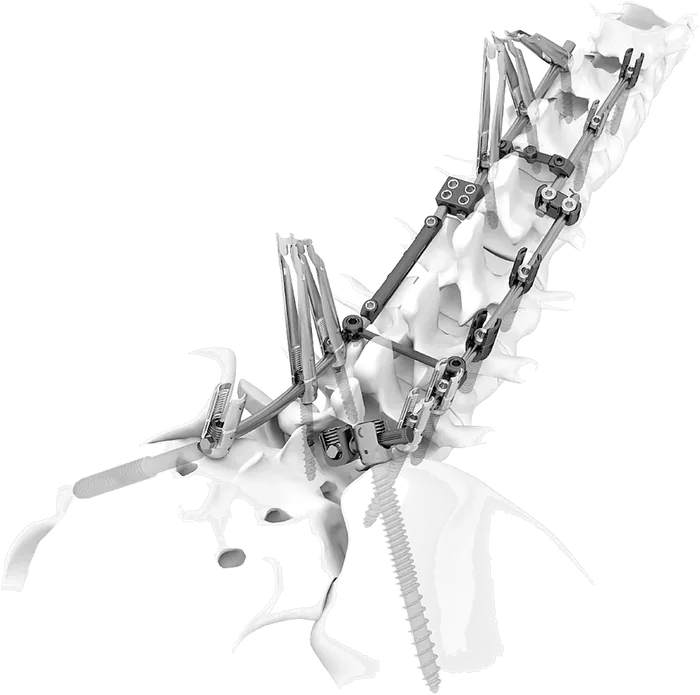
Posterior thoracolumbar construct — polyaxial pedicle screws and rods instrumented across lumbar levels
Posterior thoracolumbar fixation, 5.5 mm
Surgeon-led case support Direct from the manufacturer Stock held at the hospital Batch-level record per case
An illustration of a clinical team in scrubs, one wearing Vertevance
The relationship

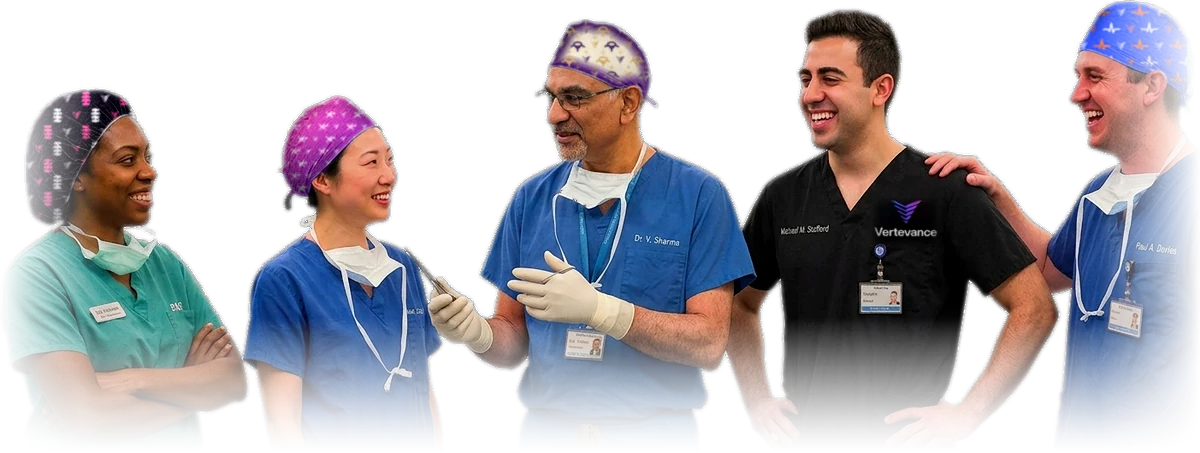
The same people, every case

You deal with the person who knows your technique and your preferences — not a territory rep passing through, and not whoever was free that morning. We take on few enough surgeons to make that promise and keep it.

The clinical side

Support that starts before the list

We plan the case with you, build the kit to the construct you intend, and stay in theatre for it. When the plan changes mid-case, the person at your shoulder knows what else is on the tray and what we can get there.

The discipline

Every implant accounted for

Each implant used is logged against the case by batch number and each instrument by serial, before the rep leaves the hospital. Stock is replaced ahead of your next list, and the hospital gets one account a month.

How a case runs with us

Identical whether it is a single-level ACDF or a long lumbar construct. Only what sits on the trolley changes.

Before the list

Procedure, levels and approach are confirmed with you, not inferred from the last case. The kit is built to the planned construct with sizes above and below it, and checked against the theatre booking the day before.

Sets and sterilisation

Instrument sets reach CSSD with enough turnaround to be processed properly, and the count sheet goes with them. Loan sets are the mechanism that keeps a full size range on your shelf without the hospital carrying the capital.

In theatre

Your rep is present for the case with alternatives already on the trolley. Rods are bent in-house to the construct rather than forced from a pre-bent stock shape, so the fixation follows the anatomy you are correcting.

After the case

Implants used are logged to the case by batch, with photographic evidence for individually packaged items, and any item dropped or damaged is flagged the same day. Replacement stock is on the shelf before your next list.

Your rating of us

After each case you can score the rep on preparedness, responsiveness and professionalism, and leave a comment. Those scores sit on the rep's record, and they decide who covers your list next time.

The rep in theatre, and the line we hold

Vendor presence in the operating room is under proper scrutiny, here as everywhere. We would rather set our position out than leave it assumed.

By invitation, never by default

A rep attends because the surgeon asked for support on that case. Attendance is at your discretion and can be withdrawn at any point, for any case.

Credentialed before the door

Every rep clears the hospital's own vendor credentialing, carries the badge that defines where they may go, and stays inside it. Theatre etiquette and infection control are the hospital's rules, not ours.

Technical, not clinical

The rep knows the instructions for use and the assembly of the system cold, and answers on the implant, the instrumentation and what is on the trolley. They do not scrub in and they take no part in clinical decisions.

On the record afterwards

Attendance, the items opened and their batch numbers are written to the case record the same day. If someone asks a question about that case in two years, the answer already exists.

Portfolio

Implants and their instrumentation, on the shelf at your hospital, counted as level kits rather than line items.

Cervical

Anterior cervical plating and interbody

Complete level kits for one-, two- and three-level ACDF — plate, cages and screws counted together.

  • Plates 19–86 mm, 4 to 10 holes, 1.75 mm profile
  • Ø3.5 mm self-drilling locking screws, fixed and 32° variable angle
  • PEEK-OPTIMA cages 6–10 mm, X-ray markers, pyramidal teeth
  • Lordotic arc, graft visibility window, screw back-out lock

Indicated for cervical trauma, tumour, degenerative disc disease and deformity; herniated disc, instability and failed fusion.

Thoracolumbar

Posterior fixation and lumbar interbody

Single-level fusion through to long constructs, with rods bent to the case rather than to stock.

  • One screw platform taking both 5.5 and 6.0 mm rods
  • Cannulated, long-arm and uni-planar pedicle screws
  • Lateral, parallel and growth connectors; lamina hooks
  • Sacroiliac screws; Z-shaped and stepped rods
  • PLIF and TLIF cages

Indicated for degenerative instability, spondylolisthesis, deformity correction, trauma and revision.

Cranial

Cranioplasty and cranial fixation

Reconstruction of the vault after decompression or trauma, with the fixation to hold it.

  • Patient-specific PEEK and UHMWPE implants
  • Titanium mesh with fixation screws
  • Low-profile fixation for bone-flap stabilisation
  • 3D-printed moulds for intra-operative PMMA shaping

Indicated for cranioplasty after decompressive craniectomy, traumatic defects and post-tumour reconstruction.

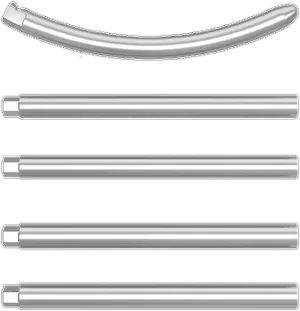
Straight rod stock and a pre-curved rod
Rod stock, straight and curved
Cannulated polyaxial pedicle screw
Polyaxial pedicle screw
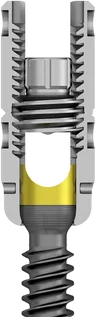
Sectioned view of the screw head locking mechanism seating a rod
Locking mechanism, sectioned

What a kit carries, by procedure

Built from the procedure and level you book, and adjusted with you before the list. Quantities are the starting point, not the limit — sizes above and below travel with every kit.

ProcedureImplants in the kit
ACDF, 1 level1 cervical cage · 4-hole plate · 4 screws
ACDF, 2 level2 cervical cages · 6-hole plate · 6 screws
ACDF, 3 level3 cervical cages · 8-hole plate · 8 screws
PLIF, 1 level1 cage · 4 pedicle screws · 2 rods
PLIF, 2 level2 cages · 6 pedicle screws · 2 rods
TLIF, 1 level1 cage · 4 pedicle screws · 2 rods
TLIF, 2 level2 cages · 6 pedicle screws · 2 rods
Long lumbar fixation8+ pedicle screws · extended rods, bent to the construct
Cranioplasty, meshTitanium mesh · fixation screws
Cranioplasty, patient-specificPEEK or UHMWPE implant made to the patient's CT

Ranges beyond spine and neuro

The range grows the way the first one did: a surgeon we work with needs a system, we source it, bring it in properly and learn it before we sell it. We are evaluating ranges outside spine and neuro now — and we will add them only where we can support them to the standard above, not simply to widen a catalogue.

Neuro is not a sideline

Cranial work entered the range because a surgeon asked for it, and it is supported the way the spine range is — patient-specific implants planned from the patient's own imaging, titanium mesh, and low-profile fixation for bone-flap stabilisation.

A patient-specific implant is made to a CT reconstruction and has to be right the first time. The scan protocol, the manufacturing lead time and the theatre date are agreed before anything is ordered, and we carry that conversation rather than leaving it between the surgeon and a factory on another continent.

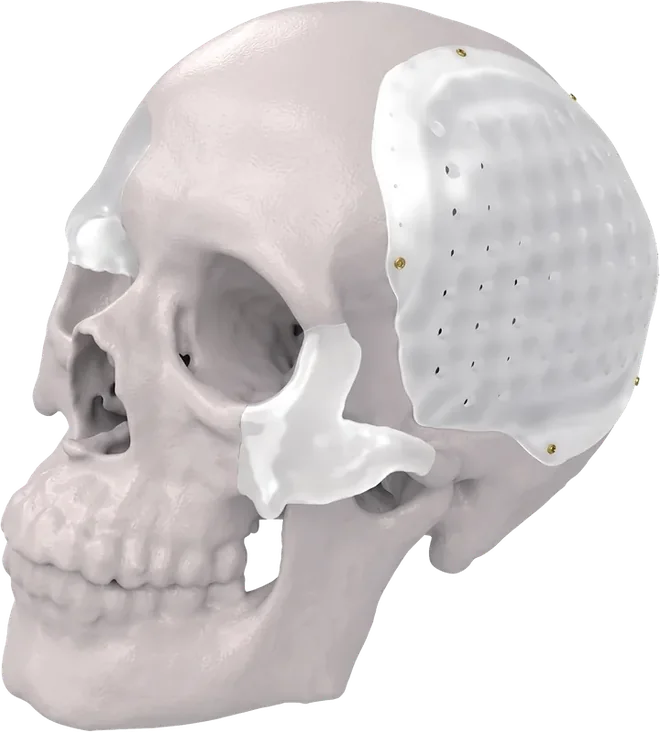
Patient-specific cranial implant fitted to a skull model, covering a parietal defect
Patient-specific cranioplasty

Who stands behind a case

Not a logo wall. Four links in one chain, and what each is answerable for when a case goes wrong.

  1. Manufacturer

    Double Medical

    Our spine and neuro implant systems are manufactured by Double Medical in Xiamen, and imported directly by us. They answer for the device: its design, its materials, its manufacturing record and its instructions for use.

  2. Clinical & regulatory

    Mark Banfield & Associates

    Our clinical and regulatory partner. They answer for the framework we operate inside — SAHPRA establishment licensing, ISO 13485 quality management, device listing and the vigilance and recall obligations that come with holding stock in a hospital.

  3. Distributor

    Vertevance Medical

    We answer for everything between the factory and the incision: what is on the shelf, whether it is in date, whether it reaches CSSD in time, who stands in the room, and what the record says afterwards.

  4. Theatre

    The surgeon and the hospital

    The clinical decision is never ours, and we do not pretend otherwise. Our job is to make sure nothing about the implant, the instrumentation or the paperwork is the reason a case goes badly.

Every link above can be named, and every one of them can be called. A chain that cannot be named is not a chain.

Traceability and records

A distributor is the one link that has to prove what went into the patient, and how it got there.

Traced at the right unit

Titanium implants sterilised loose can only be traced by batch, so the batch is assigned to the case at scheduling. Individually packaged cages are captured by size and batch at the point of use. Instruments are tracked by serial number.

Evidence at the point of use

A photograph of each distinct item opened, quantities logged per item, and anything dropped, contaminated or damaged flagged on the same submission rather than reconciled later.

Counted daily, not monthly

Stock at each hospital is counted against what was logged, every day. A discrepancy surfaces within twenty-four hours and sits against the account of the rep who handled it.

Answerable on recall

If a batch is withdrawn, the question is which patients and which shelves. Because every unit is tied to a case and a site, that is a query rather than an investigation.

Who we work with

A case passes three sets of hands before it is billed. All three should get the same answer from us.

Surgeons

Sizing and availability you can plan a list around, a rep who knows the tray, and one number that is answered.

Theatre and CSSD

Sets delivered with enough turnaround to decontaminate properly, count sheets that reconcile, and no scramble on the morning of the list.

Hospital procurement

One consolidated monthly account per hospital, settled by EFT, with a case-level and batch-level record standing behind every line.

What we are committed to

We meet a doctor where they are

Your list, your hospitals, your technique. We fit around the way you already work rather than asking you to work around our catalogue, our stock levels or our delivery schedule.

Improving patient outcomes

Every decision here is measured against the person on the table — the right implant in the right size, on the shelf on the day, and a record afterwards of exactly what was used.

Clinical service excellence

Support that is planned before the list, credentialed at the door, present for the case and reviewed after it. We hold ourselves to the standard the theatre holds itself to.

A tailored service that cannot be replaced

We build around how you operate rather than around a catalogue. That is not something a larger supplier can copy at scale, and it is the whole reason this company exists.

I started Vertevance because the same gap kept showing up. The stock arrives, but the person standing behind it changes from case to case — one week a rep who knows the system cold, the next someone meeting the tray for the first time. That inconsistency is what the surgeon ends up absorbing, and the theatre pays for it in time.

Spine and neuro work is unforgiving of that. So this company is deliberately small, deliberately close to the surgeons it serves, and deliberately accountable for what happens in the room. The same people come back to the same lists. If something goes wrong on one of your cases, you will be speaking to me about it.

Dewald Postma Managing Director
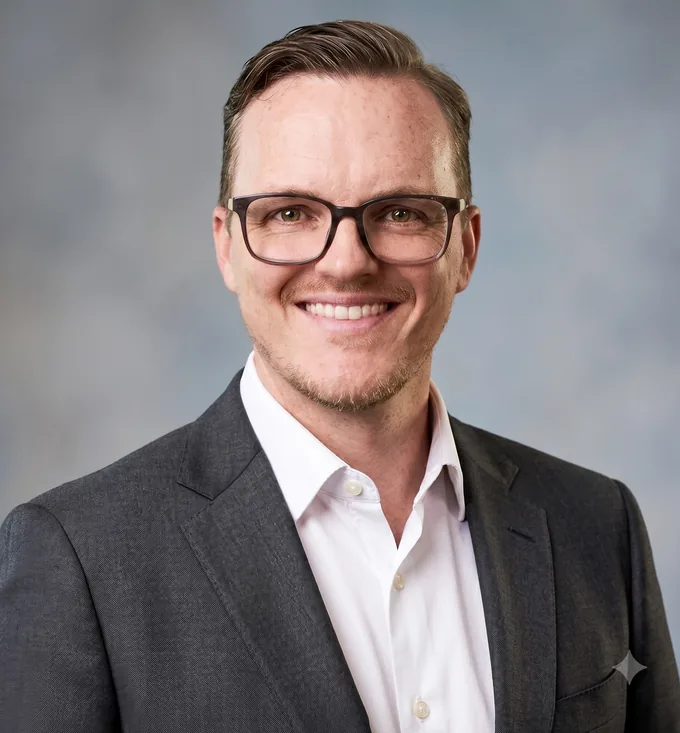
Dewald Postma, Managing Director of Vertevance
Dewald Postma Managing Director · dewald@vertevance.com

About Vertevance

Small on purpose. The things that matter most here do not scale, and we are not trying to make them.

Vertevance (Pty) Ltd, trading as Vertevance Medical, is an independent spinal and neurosurgical implant distributor based in Johannesburg, serving private hospitals in Johannesburg, Durban and Limpopo.

We import directly from our manufacturing partners and hold stock locally. Keeping the chain between the factory and the theatre short is what lets us carry a full size range on consignment, replace it quickly, and price a case without a third party in the middle.

The company is led by Dewald Postma, who is also the named person carrying regulatory responsibility for what we distribute. In practice that means the person who owns the business is reachable about a case.

We would rather be the supplier three surgeons trust completely than the one thirty surgeons ring when nobody else picks up.

Entity
Vertevance (Pty) Ltd
t/a Vertevance Medical
Based in
Johannesburg, Gauteng
Service area
Johannesburg · Durban · Limpopo
Managing director
Dewald Postma
Authorised representative
Dewald Postma

Start with a list, not a catalogue

Tell us the procedures you run, the hospitals you operate at, and the systems you use now. We will come back with what we can cover, what we would have to bring in, and how soon.

Based in
Johannesburg, Gauteng
Service area
Johannesburg · Durban
Limpopo